GUIDE TO THE NEW SYNAGOGUE
Sokolovská 209
Milevsko
Dear visitors,
The blazing rays of the summer sun streaming through the large south-facing windows of the Milevsko synagogue transform this space into a radiant sanctuary where two traditions – Jewish and Christian – meet.
The name ‘synagogue’ is derived from the Greek word synagogein (to gather) and corresponds to the Hebrew term beit knesset, which translates into English as ‘house of assembly’. It is therefore not only a place of communal prayer, but also the centre of cultural and social activities for the Jewish community. The Milevsko Synagogue has long since lost its original purpose, yet it still stands here with quiet dignity, a silent witness to the events of the 20th century. We invite you to explore selected chapters from its rich history. This guide introduces the origins of the synagogue, its architectural character, and, in part, its interior furnishings. It also highlights the presence of the Czechoslovak Hussite Church, which has been active within this space since 1950. While this guide offers an insight into the site, it is not intended to be exhaustive. We look forward to expanding it with additional chapters in the future.
The Milevsko Synagogue bears a painful scar; its oppressive silence and emptiness can never be truly filled. It remains a poignant presence here, like an ever-present shadow. Yet even so, this space strives to be a place of hope, where mutual understanding and tolerance are nurtured. For this, great thanks are due to Vladimír Karbusický, pastor of the Czechoslovak Hussite Church congregation in Milevsko.
We wish you an inspiring visit and an engaging read.
Marek Herout, Co-Founder of VÝHYBKA Association
Cover: Tomáš Staněk, Milevsko Synagogue, 2024
THE NEW SYNAGOGUE
IN MILEVSKO
Lenka Uličná
Welcome to the former synagogue, a place where, just 100 years ago, ancient Hebrew prayers once resounded and the respected citizens of Milevsko wrapped themselves in their prayer shawls. From the gallery, their wives looked down, prayer books in hand, in the endpapers of which they recorded important dates from their family histories. Come with us and travel a little further back in time.
It is 1914, and the Milevsko Jewish community is announcing a tender in the Austrian press for the construction of a new synagogue. The old synagogue on Husovo Square, No. 387, had long since ceased to meet the needs of the growing community; over time, only the tip of its arched portal in the passageway would remain visible. Some of the synagogue’s textiles and other valuables, however, continued to be used in the new synagogue just a few dozen metres away.
The year is 1919, and the new synagogue is officially opened. This unique building combines elements of Cubism and Classicism. Its dominant features are the Classical columned façade with a tympanum and a double staircase leading to the women’s gallery. Yet it would serve the Jews of Milevsko for only twenty years.
The Second World War begins: synagogues are closed, and Jews are deported on transport trains. Milevsko becomes one of the collection points where ritual objects and religious books from closed synagogues, documents from dissolved Jewish communities, and the private property of Jewish residents from the town and surrounding area are gathered. These wartime collections are sent to the Central Jewish Museum in Prague. There, with the consent of the Nazi authorities, thousands of items are carefully catalogued by Jewish historians, archivists, and librarians – until they themselves are put on transport. Thanks to their work, we now have a unique collection of Jewish cultural heritage, one of the largest in the world. It also includes items from Milevsko and its surroundings.
You may have noticed paving stones with brass plaques in the streets, known as Stolpersteine (‘stones of remembrance’). They are set into the pavement in front of houses from which Jewish residents were taken to concentration camps. You can also find them in Milevsko. Many local Jews, however, took it upon themselves to preserve the memory of their names in other ways. For example, on a white linen Torah binder (inv. č. 061075 https://collections.jewishmuseum.cz) we can read a Hebrew inscription embroidered in red thread: “This was donated by Lea, wife of Zelig Eisner of Milevsko, on Wednesday, the eve of the festival in the year 620 by the abbreviated count, that is, the year 5620 from the creation of the world.” The inscription reveals a slight uncertainty on the part of the seamstress regarding the abbreviated festival name – it was most likely the Feast of Tabernacles, Sukkot, so the Torah binder commemorates 12 October 1859.
Torah binders are strips of fabric used to cover and protect the Torah scroll, that is the scroll containing the Hebrew text of the Five Books of Moses. The Torah scrolls are kept in the Torah Ark on the front wall of the synagogue, beneath the Tablets of the Law. A synagogue curtain usually hangs in front of the Torah Ark, often with an elongated drapery above it. In one of the last photographs taken before the wartime deportations, the Milevsko sandstone ark is covered by a burgundy curtain (inv. č. 061079 https://collections.jewishmuseum.cz) decorated with stars and golden lions standing on two columns. The lions hold the Torah crown (keter) in their paws. Beneath it is an inscription in Hebrew script: “Dedicated by Josefine Liebner and Emil Hahn in memory of their deceased parents.” However, the inscription is not in Hebrew, but in ‘Judeo-German’ – German written in Hebrew script.
Let us take a brief linguistic detour: Judeo-German (also Yiddish-Deutsch or Judendeutsch), is a language related to Yiddish. It was spoken at the turn of the 19th and 20th centuries almost exclusively by Eastern European Jews. Like most Czech Jews, the Jews of Milevsko attended German schools from the end of the 18th century onwards, following an imperial decree; only about a century later did some Jewish communities begin to adopt Czech. Inscriptions on objects from Milevsko and the surrounding area are predominantly in Hebrew, but prayer books found in the genizah of the Milevsko Synagogue show that by the end of the 19th century, local Jews were using Hebrew-German prayer books in their worship. Hebrew was the sacred language, while the German translation ensured the text could be understood. An example is a weekday prayer book, or siddur, with the Hebrew title Kos Yeshuot (‘Cup of Salvation’) (inv. č. 183466 https://collections.jewishmuseum.cz). According to the owner’s inscription, this siddur belonged to Mrs Hermína (or Irma) Kohnová.
And here we take the liberty of making another brief detour. What exactly is this genizah that tells us which books Hermína used for prayer? A genizah is a Jewish practice of setting aside worn-out objects that have served religious purposes – and which usually bear the name of God –, so that they may be allowed to disintegrate naturally, thereby avoiding the destruction of God’s name by human hands. The place where such objects are stored is also called a genizah. In Milevsko, this hidden repository was discovered by Vladimír Karbusický, pastor of the Czechoslovak Hussite Church, which has been housed in the former synagogue building since 1950. The genizah was located in the attic of the synagogue and could be reached by climbing a ladder from the women’s gallery.
An investigation of the genizah in 2023 revealed, alongside fragments of prayer books, a shiviti plaque (inv. č. 183473 https://collections.jewishmuseum.cz). This object is typically hung in the synagogue and bears the text from the Psalm: “I have set the Lord always before me”. A text found in the genizah, inscribed with the words “Yizkor Elohim et…” (‘May God remember…’), also helped preserve the memory of the Jews of Milevsko. Those commemorated here are Pinchas ben Meshulam, Yehonatan ben Avraham Dov, Kalman ben Meir Yehuda, Binyamin Zeev ben Shlomo, Naftali ben Yehonatan, Miriam bat Frumet, Esther bat Rivka, Yitzhak Eisbeer, and Alex Herman. In the bottom right-hand corner, the author of the memorial inscription, J. Goldstein, has signed his name. The date of 1 April 1887 indicates once again that this text was used either in the old synagogue or in one of the closed synagogues in the vicinity.
Yet let us return to the new synagogue in Milevsko and go straight to the most precious item it contained: the Torah scroll. We already know that the scrolls were kept in the Torah Ark. In addition to their binders, the Torah scrolls are accompanied by a number of other ceremonial accessories. Each scroll is traditionally dressed in a mantel (a decorated rectangular piece of fabric) and a silver shield hangs over it, such as the one donated in 1829 by Leyb, son of Faysh Kramer, and his wife Recha of Milevsko (inv. č. 010730 https://collections.jewishmuseum.cz). Two conical vases that decorate its edges are entwined by winged dragons with birdlike heads and entwined necks. The shield was likely crafted by Thomas Höpfel, a prominent Prague Jewish goldsmith of Bavarian origin.
Let us conclude our brief glimpse into the memoirs of the Milevsko synagogue with a kiddush cup. In both Judaism and Christianity, the cup is a symbol of consecration, blessing, and community. The Milevsko cup (inv. č. 004191 https://collections.jewishmuseum.cz) was donated in 1896 by Yechiel Oppenheimer and his wife, Mrs Esther, in honour of their daughter Bune. In Judaism, the cup is used for the ritual blessing over wine; this ceremony is called kiddush (‘sanctification’). It is usually recited by the head of the family on Friday evening over a cup of wine, from which all then drink. Kiddush is also performed in the synagogue, to sanctify the Sabbath or another holiday. It is a moment when the community gathers for light refreshments and shared celebration.
Today, on the gable of the former synagogue in Milevsko, we can see another cup – the chalice of the Czechoslovak Hussite Church, which respectfully preserves the memory of the Jewish community of Milevsko.
CZECHOSLOVAK HUSSITE CHURCH
Vendula Hnídková
The Czechoslovak Hussite Church is a most remarkable institution. As its name suggests, it emerged as a national church in the newly founded Czechoslovakia during the turbulent period following the First World War. As a contemporary observer put it, the new religious movement “erupted like a fire, smouldering within the souls of the Czech people, unexpectedly, spontaneously, like any inner spiritual need, and as the final manifestation of the Czechoslovak revolution of the spirit.”
However, the seeds of its formation had already begun to take root at the start of the 20th century, when dissatisfaction with contemporary religious practice was steadily growing among some Catholic priests and lay believers. These representatives of so-called Catholic modernism were particularly troubled by the linguistic inaccessibility of church services, which were not conducted in Czech but celebrated in Latin. Latin, however, was understood only by a small handful of people who had received a higher academic education. As a result, women – with the exception of a small group of graduates from progressive girls’ schools – had practically no access to Latin and were therefore unable to fully understand Catholic ceremonies.
Another ambition of the reformers was to involve the faithful more actively in the administration of the Church, and some Catholic priests also took issue with the requirement of celibacy. (Put simply, celibacy is the obligation of priests, monks and nuns not to marry and to abstain from sexual relations. It is one of the main principles that distinguishes Catholicism from Protestant churches, the Orthodox Church, and other denominations.)
Efforts to reform the Catholic Church did not cease even during the First World War. At that time, the bond between the ‘cassock and sword’ grew even stronger, as “the Catholic priest was a faithful companion to the Austrian officer throughout the war”, as the leading interwar journalist Ferdinand Peroutka critically observed in his classic work Budování státu (‘Building a State’). Such a close association between Catholicism and the Austro-Hungarian Empire fuelled further resistance among sections of Czech society. Perhaps the most striking manifestation of anti-Catholic sentiment after the war was the toppling of the Marian Column in Old Town Square, when a misguided crowd viewed the Baroque monument as a symbol of the defeat at the Battle of White Mountain, and, by that logic, felt the urge to remove it from public space.
As we can see, the Czechoslovak Hussite Church emerged from the ranks of Catholic believers who were calling for reform. As late as June 1919, Catholic priests sent their representatives to Rome to meet Pope Benedict XV. Their ambitions were truly radical: alongside changes to church structures, they demanded the right to celebrate Mass in the Czech language, the voluntary adoption of celibacy, and the permission of cremation. (Cremation was, at the beginning of the 20th century, another strong reform movement in the Czech lands. Its aim was simple – to permit the cremation of the dead, which the Catholic Church had strictly opposed.)
In short, it can be said that when representatives of Czech Catholic circles failed in the Vatican, they turned their attention to Prague. There, in the wake of the First World War and the founding of Czechoslovakia, an entirely new political situation had emerged, and the creation of a new church appeared as one of the natural outcomes of that turbulent era.
As early as September 1919, the Club of Reformist Clergy was established, headed by the charismatic Karel Farský (1880–1927), the future first patriarch. An intellectual with a strong sense of national identity, Farský maintained that the emerging religious movement must respect “the modern achievements of human consciousness and the demands of individual and social morality”.
The new church was proclaimed on 11 January 1920 in the Church of St Nicholas and was officially recognised by the state in September of the same year.
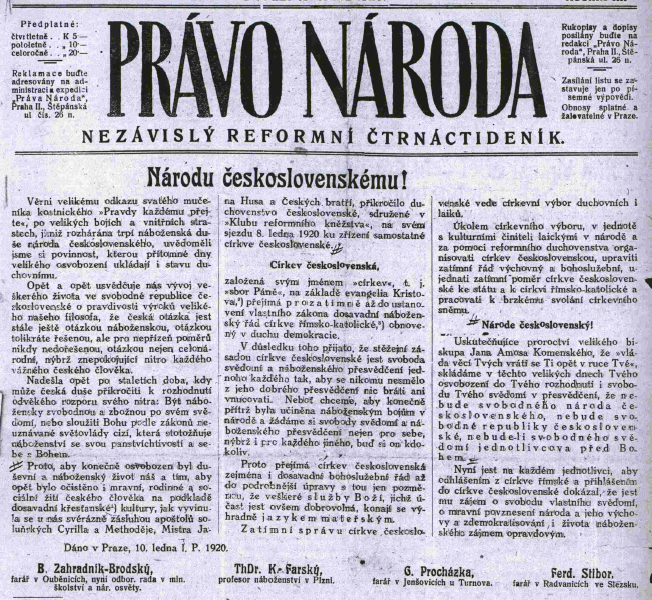
Karel Farský, Gustav A. Procházka, Ferdinand Stibor, and Bohumil Zahradník-Brodský, “Proclamation to the Czechoslovak Nation,” Právo národa 3, no. 2 (15 January 1920): 1.
RELIGIOUS COMMUNITY OF THE CZECHOSLOVAK HUSSITE CHURCH IN MILEVSKO
Zdeňka Heroutová
The first worship service of the Czechoslovak Hussite Church in Milevsko, originally scheduled to take place on 2 October 1921 in the Church of St Bartholomew, was ultimately not permitted by the town council and the solemn service was instead held in the open air on what was then Wilson Square. The preparatory committee secured official recognition of the religious community from the Ministry of Education and National Enlightenment four years later. At the constituent general meeting, held before the Council of Elders was elected, the reasons for the church’s founding, its aims, and its principles were recalled: “Man is not for religion, but religion is for man! Dogma must not be a stumbling block to reason. Rituals must not be the shackles or the substance of religion… Let man be so refined through self-education that he may guard himself against the influence of evil willingly and gladly of his own accord. Through the self-refinement of individuals, the whole of society will be refined, save for those burdened by exceptions, and that society will then easily find paths to understanding and mutual consideration.”
The independent religious community of the Czechoslovak Hussite Church in Milevsko faced a number of difficulties from its very foundation. Among the most pressing was the lack of its own space. The Huss Congregational House made use of at least two designated rooms in the local school for services, religious education, and administrative. In the 1930s, a building plot was purchased in Milevsko, but due to an unfavourable financial situation – and later in light of the political circumstances – it was never used for construction.
In 1950, the church entered into contact with the Jewish Community of Tábor in an effort to acquire the Milevsko synagogue, which had remained unused since the Second World War. Both parties concluded a lease agreement on 1 July 1950 for the building, including the garden, at an annual rent of 2,000 Czechoslovak crowns. That same year, the congregation began adapting the building for liturgical use, while at the same time respecting the preservation of the original symbols of the Jewish faith. If necessary, the building could also be restored to its original condition, as stipulated in one of the lease conditions. For this reason, the Tablets of the Law on the gable of the synagogue were merely covered with a two-tone layer of plaster, into which the Milevsko painter Karel Stehlík painted the emblem of the Czechoslovak Hussite Church: a red chalice with a white cross. Inside, the walls were painted white, the lighting was completely replaced, and the large, badly damaged glass chandelier suspended in the centre of the prayer hall was removed. The Hussite congregation decided to cover the entire surface of the former Jewish sandstone Torah Ark front arch. A new partition wall – in front of which the altar was placed – was fitted with a large, simply shaped wooden cross. A door built into this wall created a smaller space containing the original sanctuary, which was used for storing archival documents and for meetings of the Council of Elders. The newly adapted space was officially opened by the Czechoslovak Hussite Church on 28 October 1950.
The lease agreement with the relevant Jewish religious community was extended after eight years, and in the first half of the 1960s the synagogue was even offered for sale. The purchase agreement was signed in 1965, and the agreed sum of 45,000 Czechoslovak crowns was paid in three instalments. The buyer also undertook to assume responsibility for the Jewish cemetery in Milevsko, which had been without a caretaker since 1939, and to install a commemorative plaque in the synagogue informing visitors of its original function and of the Jewish religious community in Milevsko.
The last major alterations to the interior took place at the turn of the millennium. The local pastor of the Czechoslovak Hussite Church, Jan Švehla, had the front wall concealing the Torah Ark, as well as part of the original frescoes, removed. At the same time, he commissioned the creation of a Christian cross. The Central Council of the Czechoslovak Hussite Church in Prague initially entrusted this task to its official architect, Jiří Skála, based in Brno. All three of his designs placed the cross sideways against the wall. Jan Švehla did not agree with this solution, and ultimately a new design – a massive black cross of metal and glass by architect Jan Hlavín – was realised.
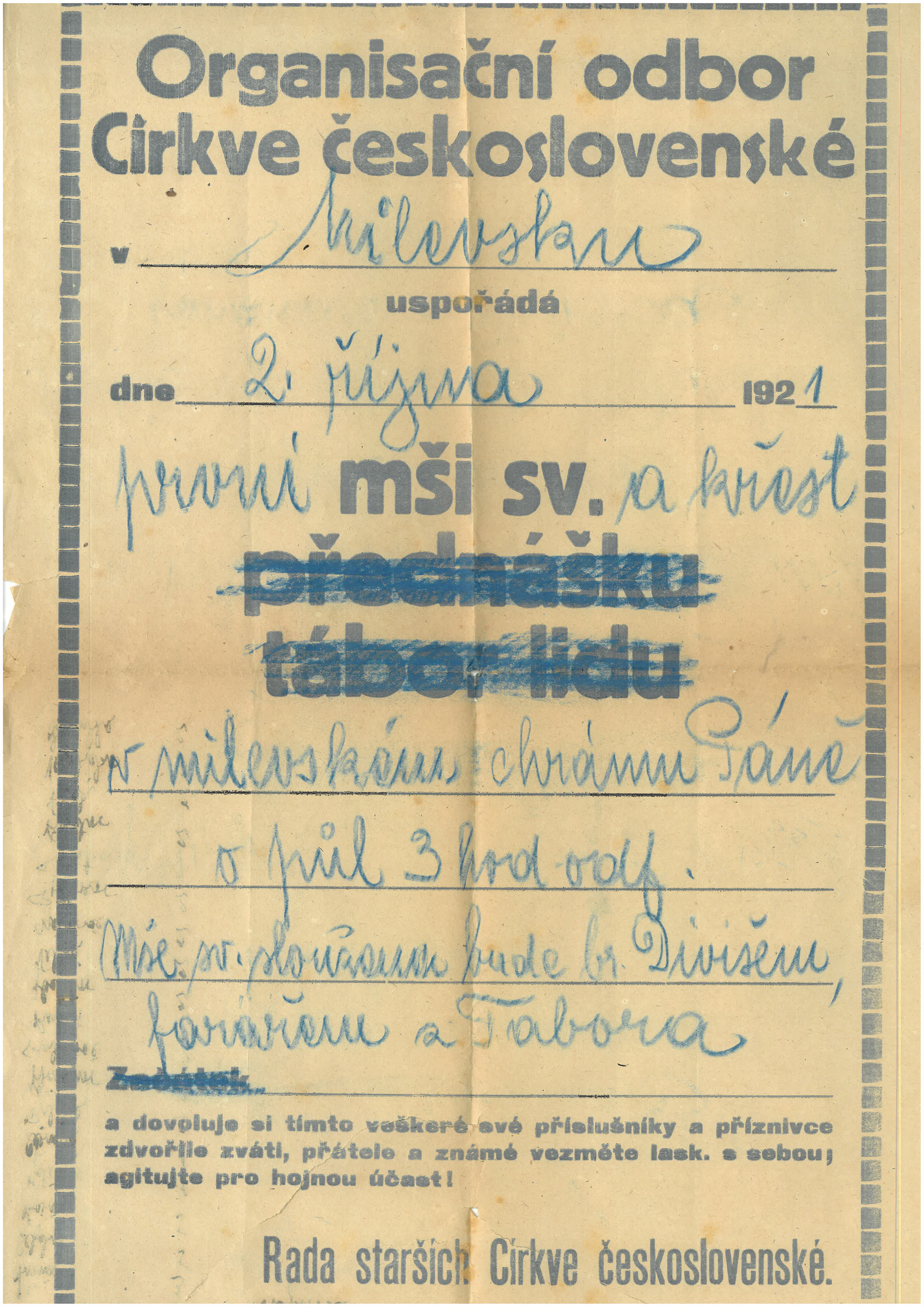
Poster for the first worship service of the Czechoslovak Hussite Church in Milevsko. The service, including a baptism, was ultimately held in the open air on what was then known as Wilson Square. Private archive of the Religious Community of the Czechoslovak Hussite Church in Milevsko.
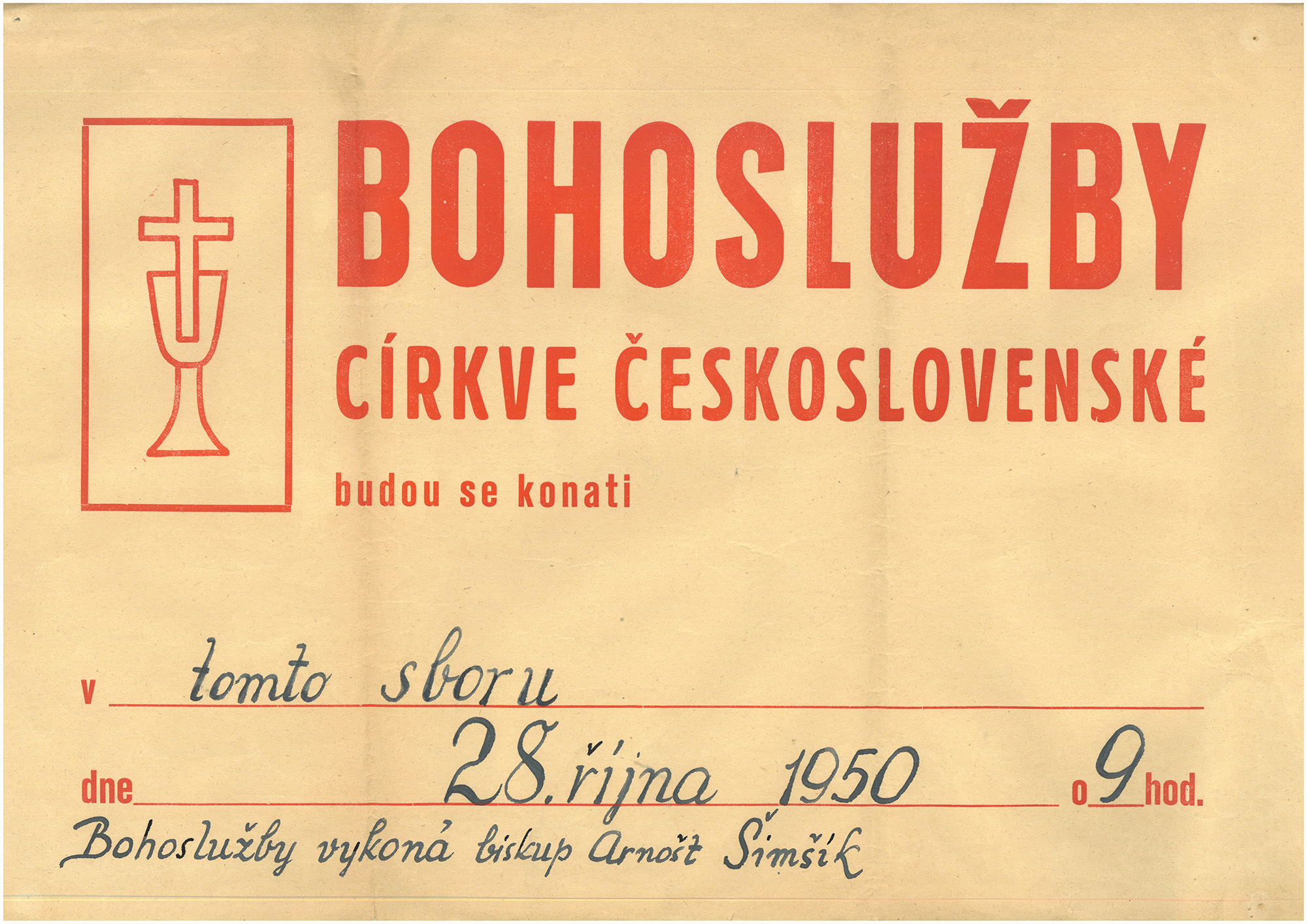
Poster for the first worship service of the Czechoslovak Hussite Church held in the synagogue. Private archive of the Religious Community of the Czechoslovak Hussite Church in Milevsko.
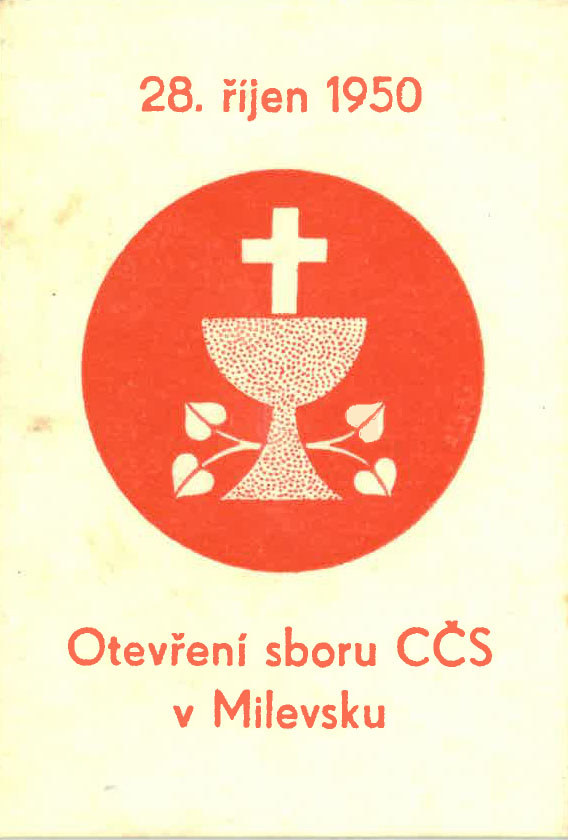
Commemorative item marking the ceremonial opening of the synagogue adapted for worship by the congregation of the Czechoslovak Hussite Church in Milevsko. Private archive of the Religious Community of the Czechoslovak Hussite Church in Milevsko.
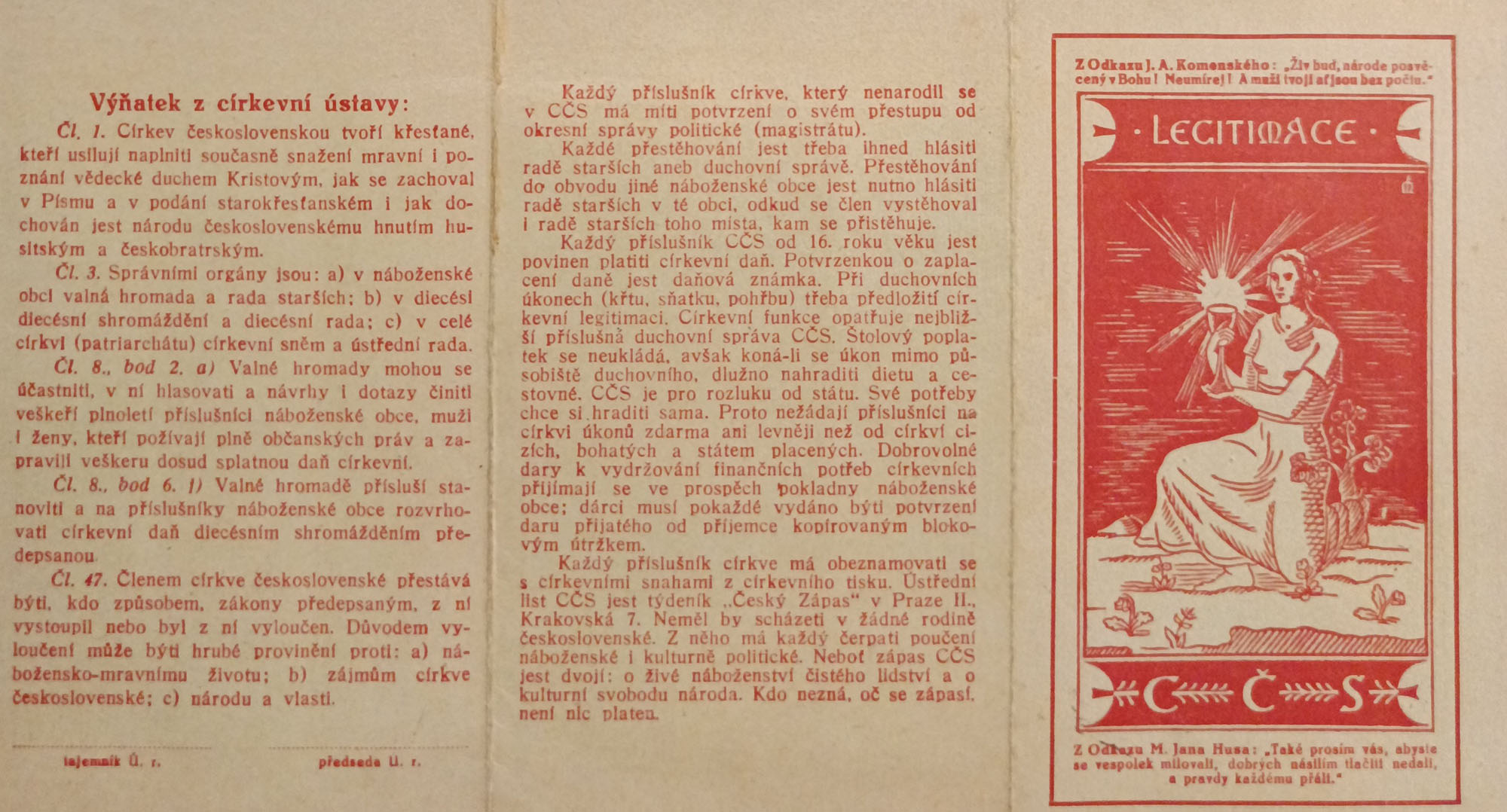
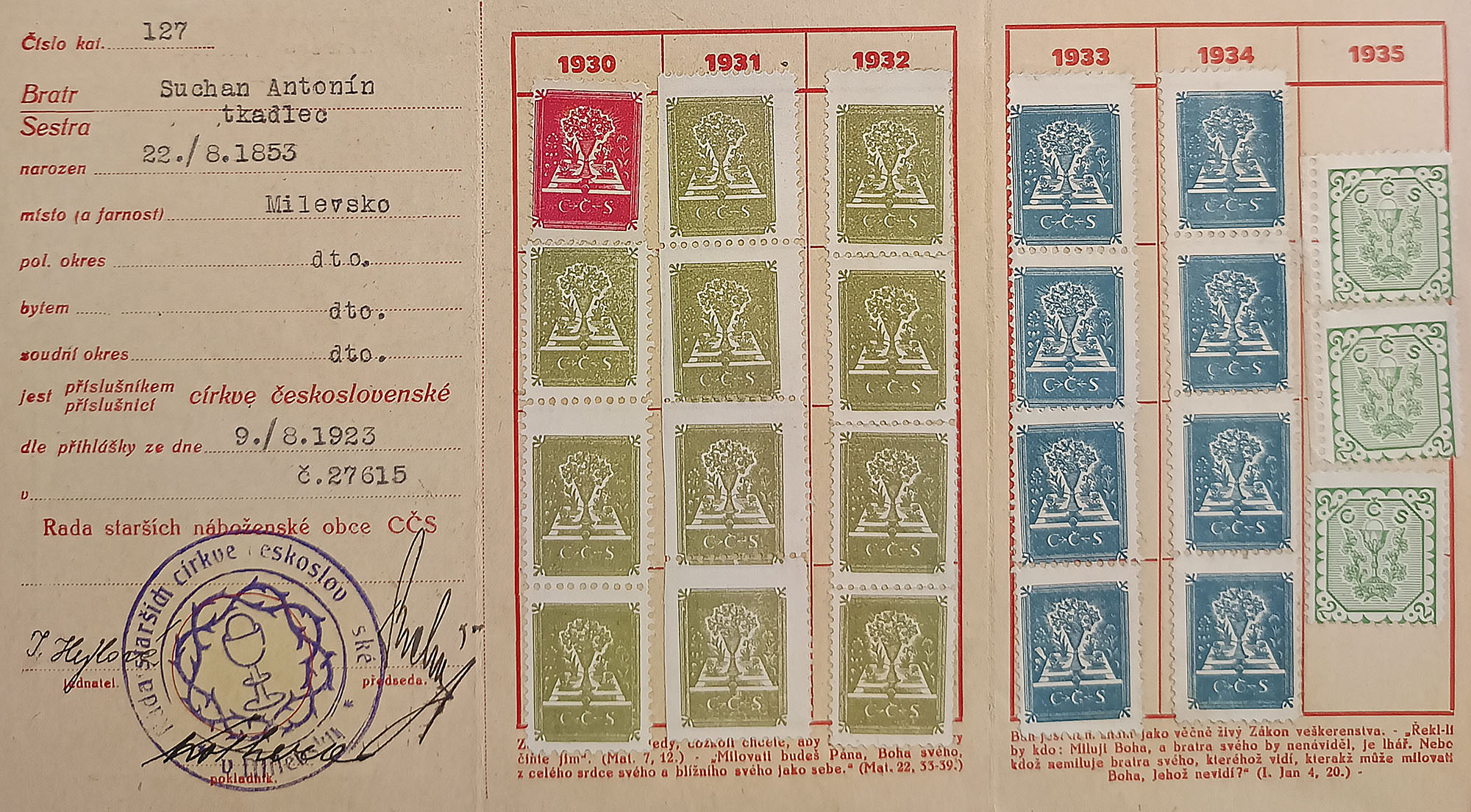
Membership card of the Czechoslovak Hussite Church. Private archive of the Religious Community of the Czechoslovak Hussite Church in Milevsko.
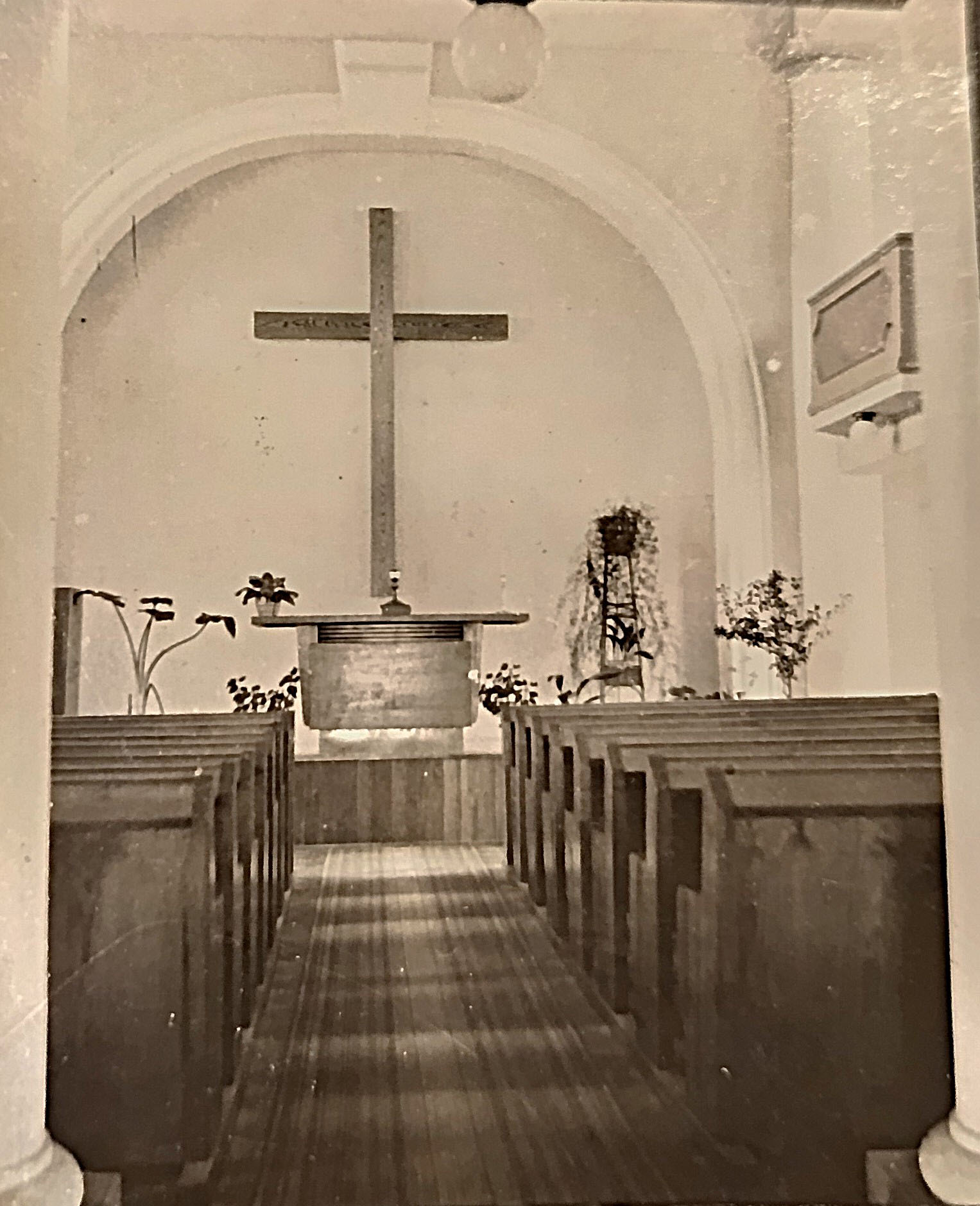
View of the newly constructed partition concealing the original Jewish sanctuary. Private archive of the Religious Community of the Czechoslovak Hussite Church in Milevsko.
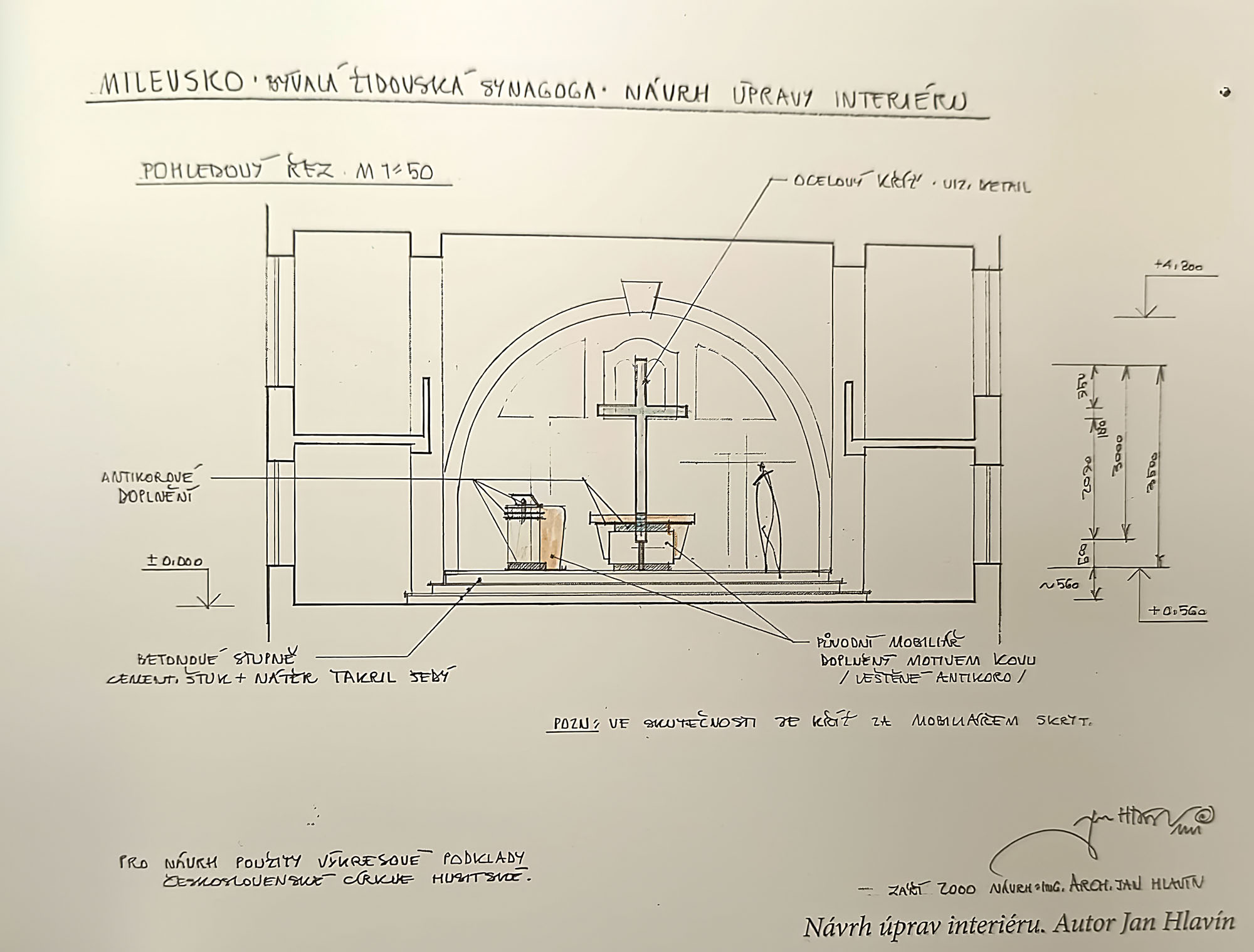
Proposal for interior alterations by architect Jan Hlavín, 2000, from the book Moje Milevsko, various authors, 2018, p. 133.
THE CONSTRUCTION OF THE NEW SYNAGOGUE
Vendula Hnídková
For that great celebration in September 1919, Kačenka Spitzerová from the Milevsko Jewish community dressed in her Sunday best and set off with her family to the new synagogue. She had an important task: carrying the ceremonial key.
Holding her mother’s hand, Kačenka climbed the double staircase at the front of the building leading to the women’s gallery. In the synagogue, women and men were separated. While the men prayed in the main hall, the women could only look down from the gallery, which was structurally separated from the men’s section. Mothers were therefore unable to sit beside their sons during services, but only with their daughters.
In an old photograph simply labelled ‘SYNAGOGE’, the new building appears shrouded in shades of grey, yet at the time of its completion it must have been richly coloured. Black-and-white photographs often distort the atmosphere of the period and make it difficult for architectural historians to determine the original colours of façades and interiors. And what colour is the former synagogue today?
On 30 March 1914, the Milevsko Municipal Building Authority granted the Jewish community a building permit for a new house of prayer (as synagogues were also commonly known at the time). The officials stipulated that the external walls would need to be reinforced and that brick-built lavatories would have to be constructed. Such facilities in a public building were certainly practical, yet a comparison with Catholic churches of the period shows that this was by no means standard practice.
From today’s perspective, construction appears to have progressed relatively swiftly, as was customary at the time, even though most of the work took place during the turbulent years of the First World War. This inevitably complicated the situation on the building site: men were leaving for the front, supplies of building materials were dwindling, and prices certainly did not remain stable. The original plan was for the synagogue to be completed by 10 September 1914, but the work was not finished until a year later.
It was only on 3 September 1915 that the construction firm of F. J. Ješ & Jaroslav Krejčí of Tábor was able to issue an invoice for the new ‘church’, as the building was described in a letter to the Jewish community. The company had initially estimated the cost of demolishing the old building and constructing the new synagogue at exactly 28,000 crowns, but in the end the original estimate was reduced, and the final cost proved even lower. The new building thus cost the local community only 26,600 crowns – by today’s standards, a truly remarkable achievement.
The ceremonial consecration of the new house of prayer took place on 11 September 1919. In a commemorative document, the builders themselves stated that “after a period so agitated by momentous world events, our community has finally succeeded, through great sacrifices and with the help of its esteemed supporters, in completing the construction of the new synagogue”.
The final inspection, however, took place much later. It was not until 25 July 1921 that all those invited gathered to assess the condition of the completed building. The final result proved simpler than the original architectural plans, as the idea of constructing a basement flat beneath the synagogue, accessible from the garden, was ultimately abandoned. This decision was likely influenced both by the dampness of the site, through which a stream flows, and by concerns about flooding.
The Milevsko synagogue is built predominantly of brick, yet as it was constructed at the beginning of the 20th century, the builders were also eager to employ modern concrete and reinforced concrete. And where could such practical material be used? Almost everywhere. During construction, it was intended for the floor and ceiling of the prayer hall, the structure of the women’s gallery, the staircase landings, and also as a lintel above the massive pillars of the façade. Surprisingly, the final inspection report makes no further mention of concrete, perhaps due to wartime shortages of materials or the strained financial situation. According to the construction log book, however, concrete was indeed used on site, and it is therefore likely that an error found its way into the final inspection report. Such things could easily happen.
The façade plan illustrates the overall monumentality of the synagogue, which stands out all the more clearly in contrast to the scale and character of the surrounding cottages. The neighbouring Baroque gable, with its volute motifs, contrasts sharply with the synagogue’s diamond-shaped ornaments, which flow seamlessly from the fencing to the entrance gate and, in further variations, continue elegantly into the balustrade of the double staircase. These distinctive elements are most strikingly expressed in the tympanum of the main façade.
As the original design was not realised in its entirety, the diamond motifs in the tympanum stand out particularly conspicuously today, appearing almost detached from the rest of the building. With their abstract yet dramatic forms, they brought the latest artistic trends of the period to the Milevsko region. While the synagogue as a whole subtly combines elements of the Baroque and Classicism, it is precisely the expressive treatment of the gable that places the building within the tradition of Cubist architecture.
And it is Cubist architecture that represents a uniquely Czech phenomenon. It developed among a group of young artists in Prague before the First World War. They admired Cubist paintings and sculptures brought from Paris by the collector and art historian Vincenc Kramář, read contemporary theoretical and aesthetic writings, and gradually absorbed the new forms. These young architects began to incorporate sharp angles and crystalline forms into their designs.
One of them was Oldřich Tyl (1884–1939), to whom the design of the Milevsko synagogue is attributed. The surviving construction log book also mentions the Prague engineer Richard Kraus (1887–1942). The way in which Tyl and Kraus secured the commission for the Milevsko synagogue remains shrouded in mystery to this day.
Another mystery that has, however, been successfully unravelled is the existence of two commemorative plaques. In the past, they had been bricked up, but traces on the front walls of the side aisles revealed that the layer of plaster concealed something beneath. The first plaque, visible in a photograph taken at the time, bears the names of the leading officials of the Jewish community: L. J. Kraus, Sam. Ferda, and Karl Weil, on whose initiative the synagogue was built and opened. The second plaque commemorates Gustav König, a native of Milevsko and an honorary citizen, who successfully established himself as a factory owner in Vienna. Even there, however, he did not forget his hometown and contributed generously to its modernisation and to the care of the poor.
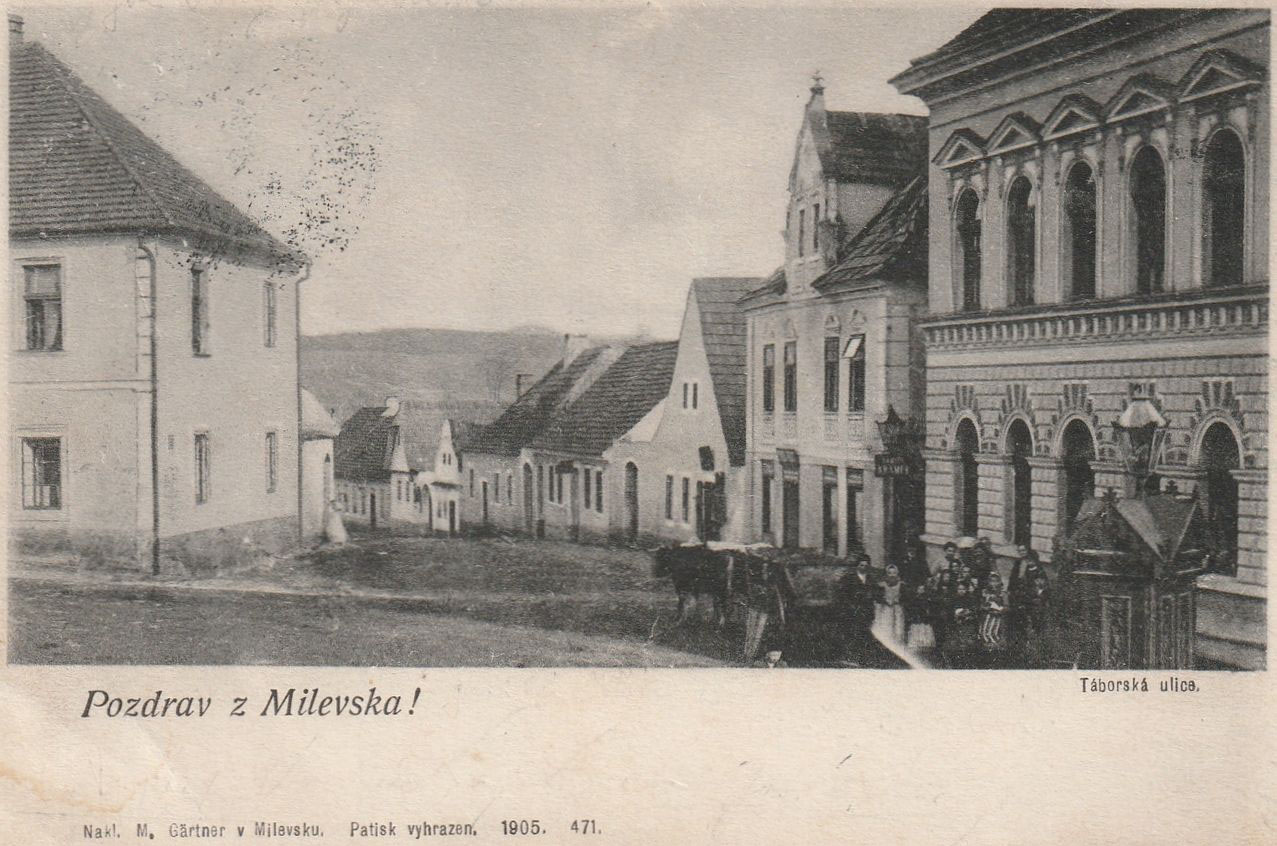
View of Táborská Street (now Sokolovská Street) before the construction of the synagogue, www.fotomilevsko.cz.
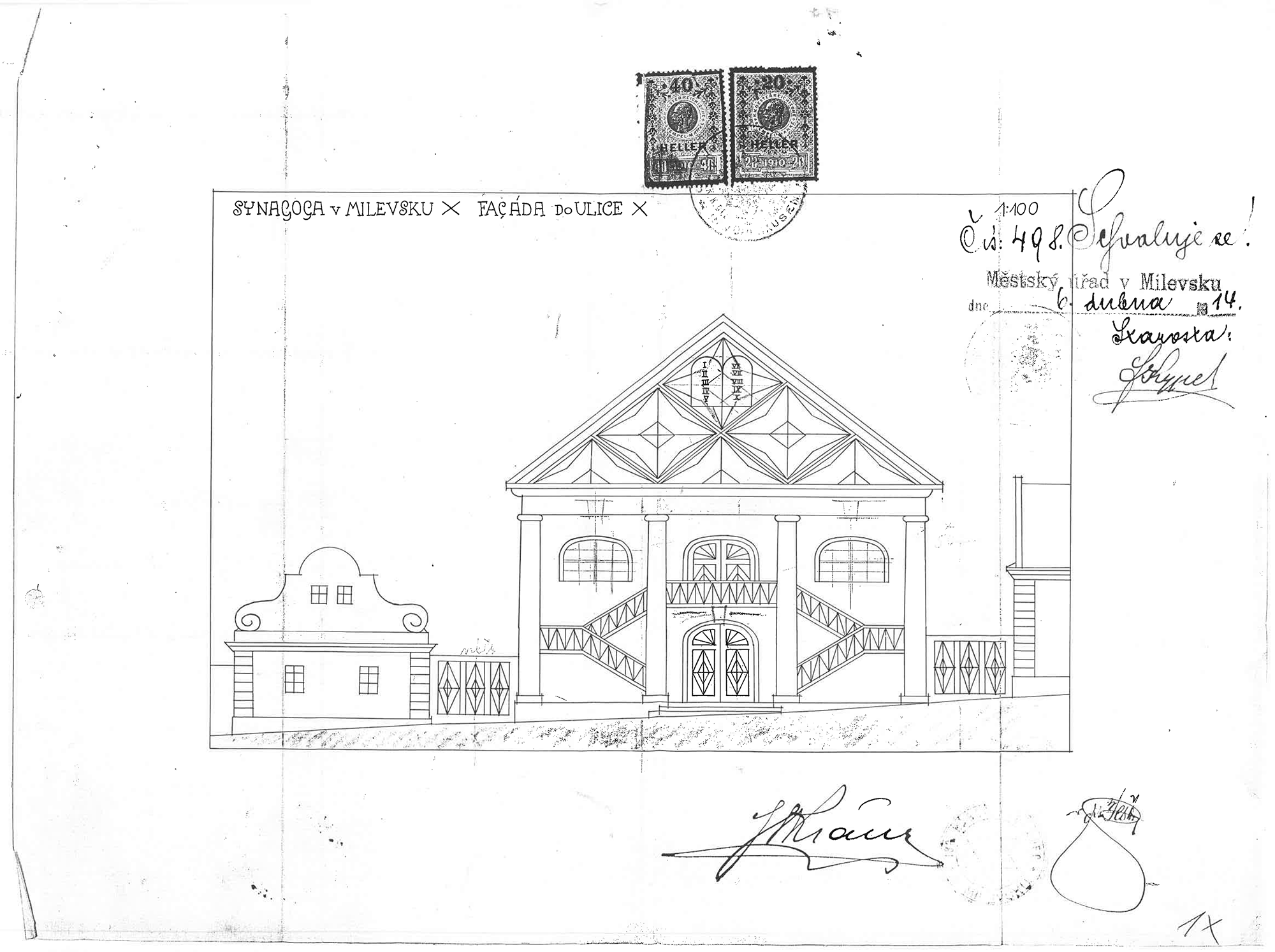
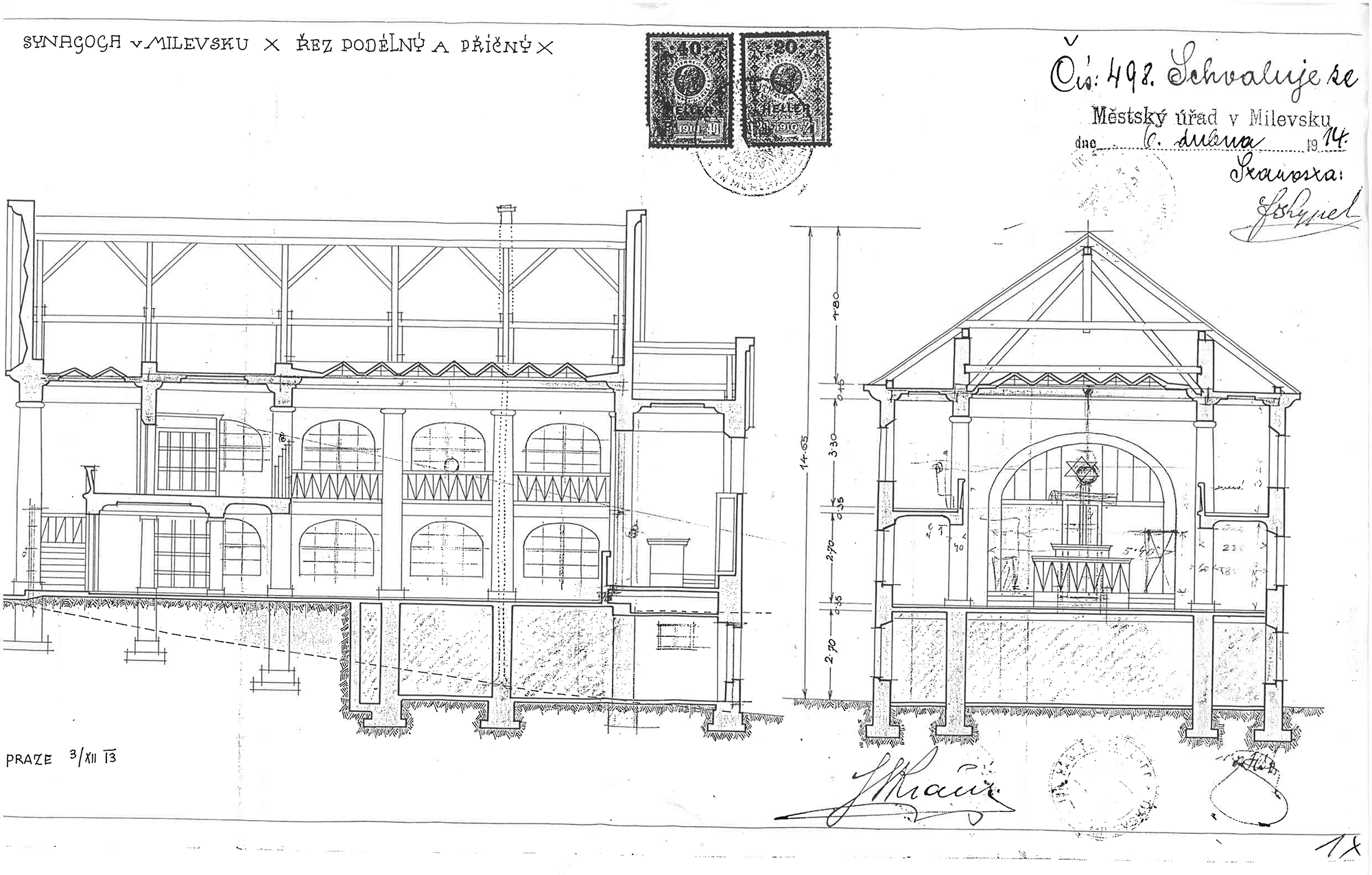
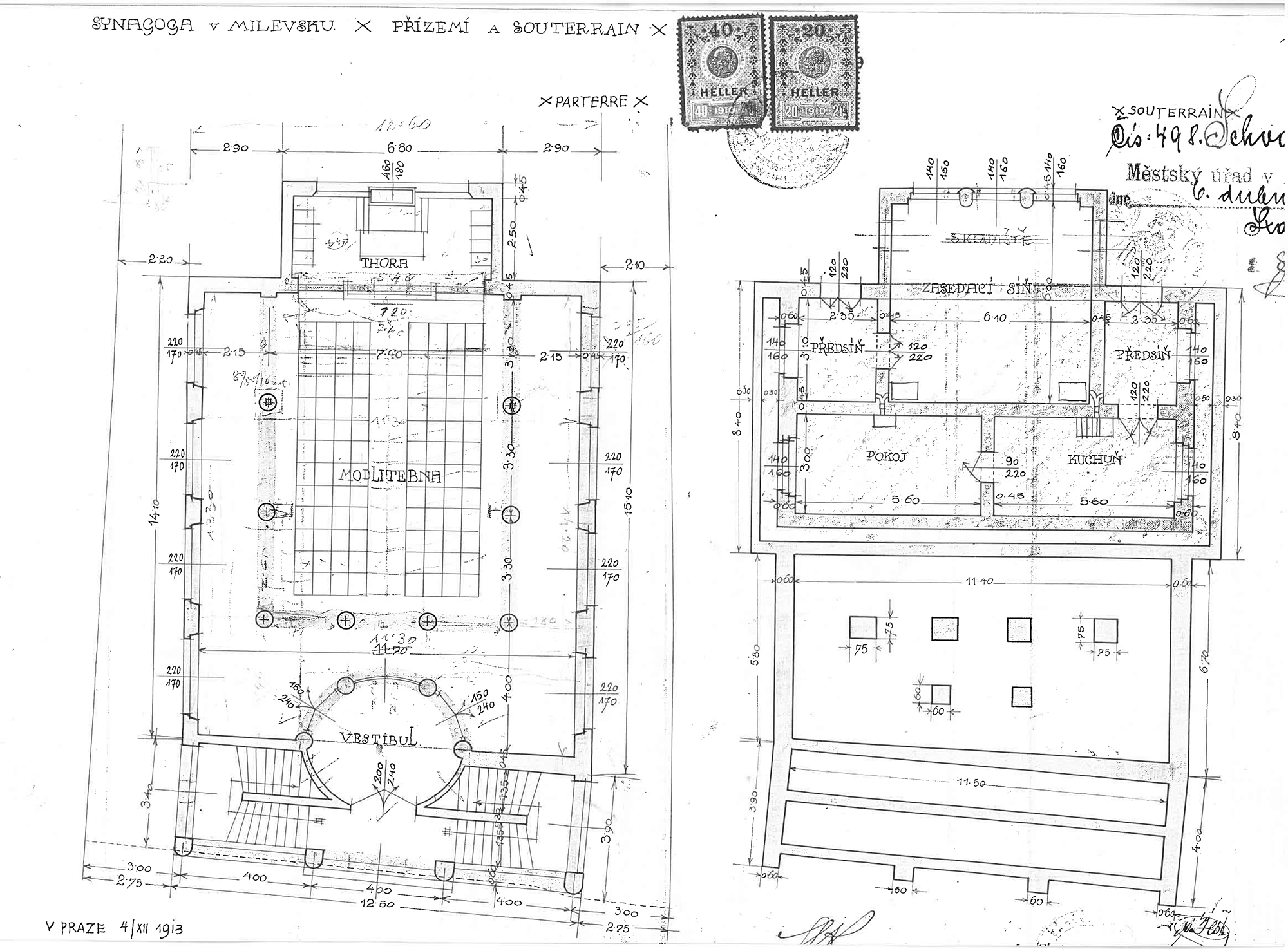
Plans for the new synagogue approved by the Milevsko Municipal Authority on 6 April 1914. Private archive of the Religious Community of the Czechoslovak Hussite Church in Milevsko.
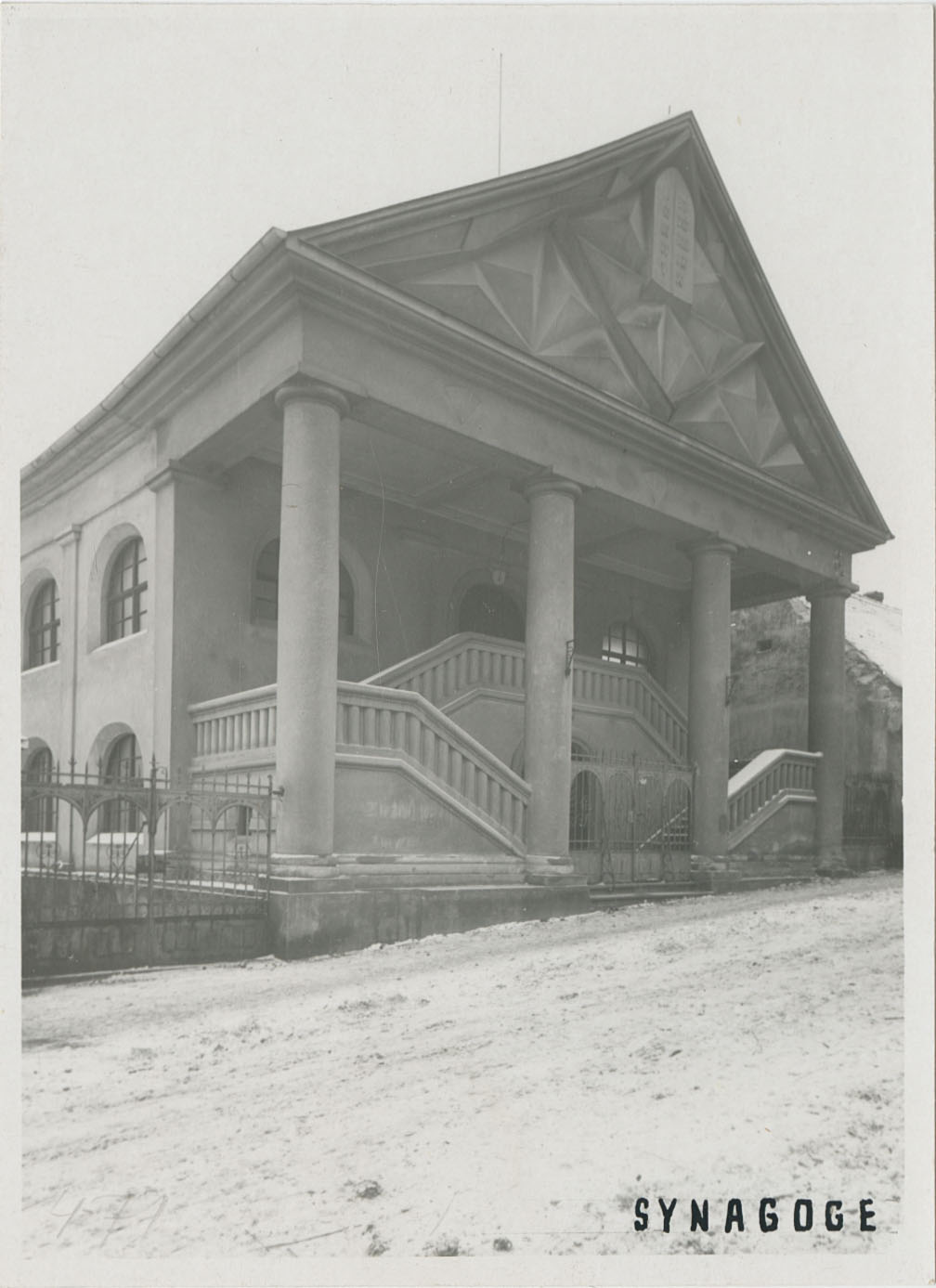
The façade of the new synagogue with the Tablets of the Law on the gable. Jewish Museum Archive, Jewish Religious Community of Milevsko.
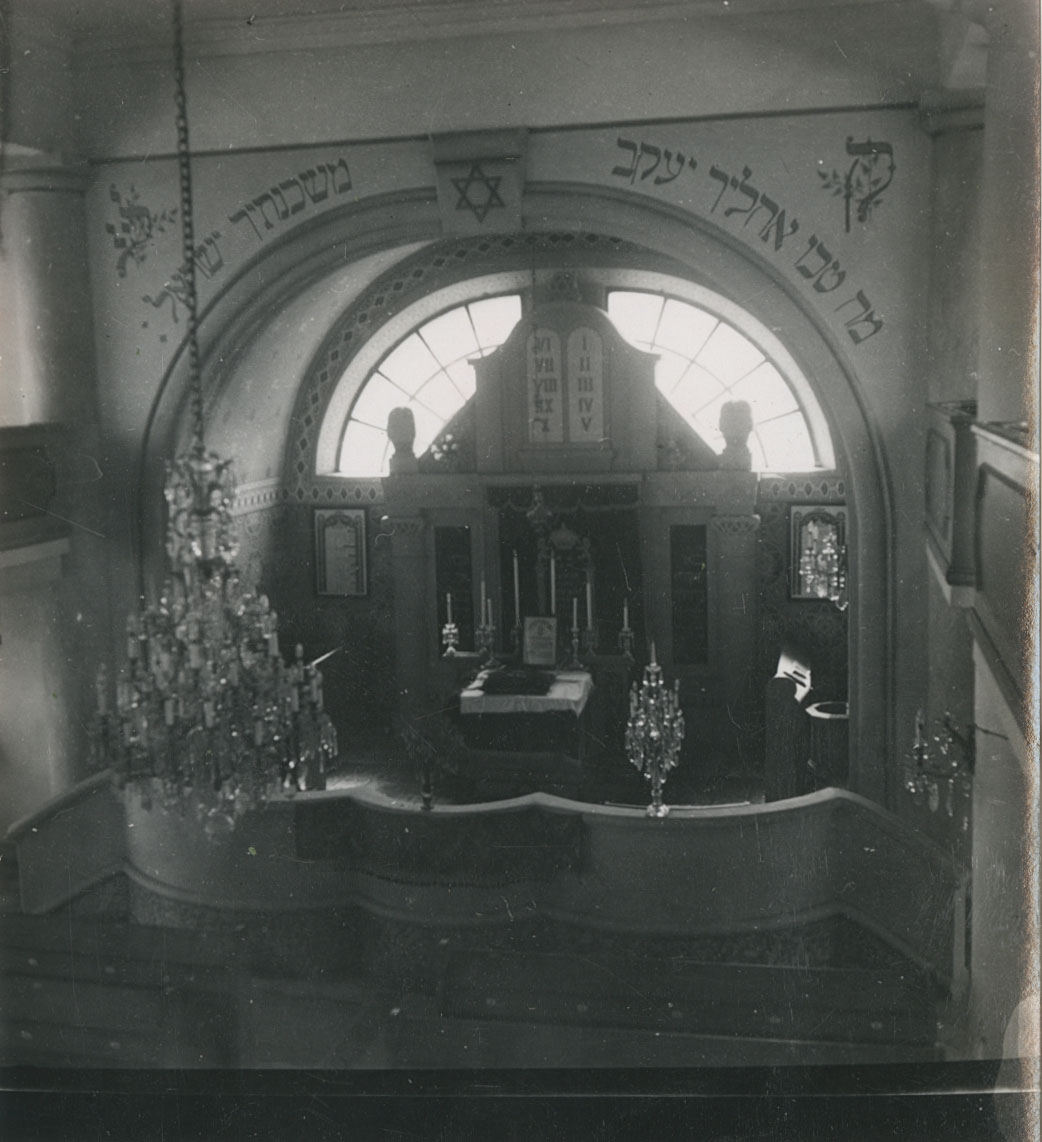
View of the interior of the new synagogue. Jewish Museum Archive, Jewish Religious Community of Milevsko.
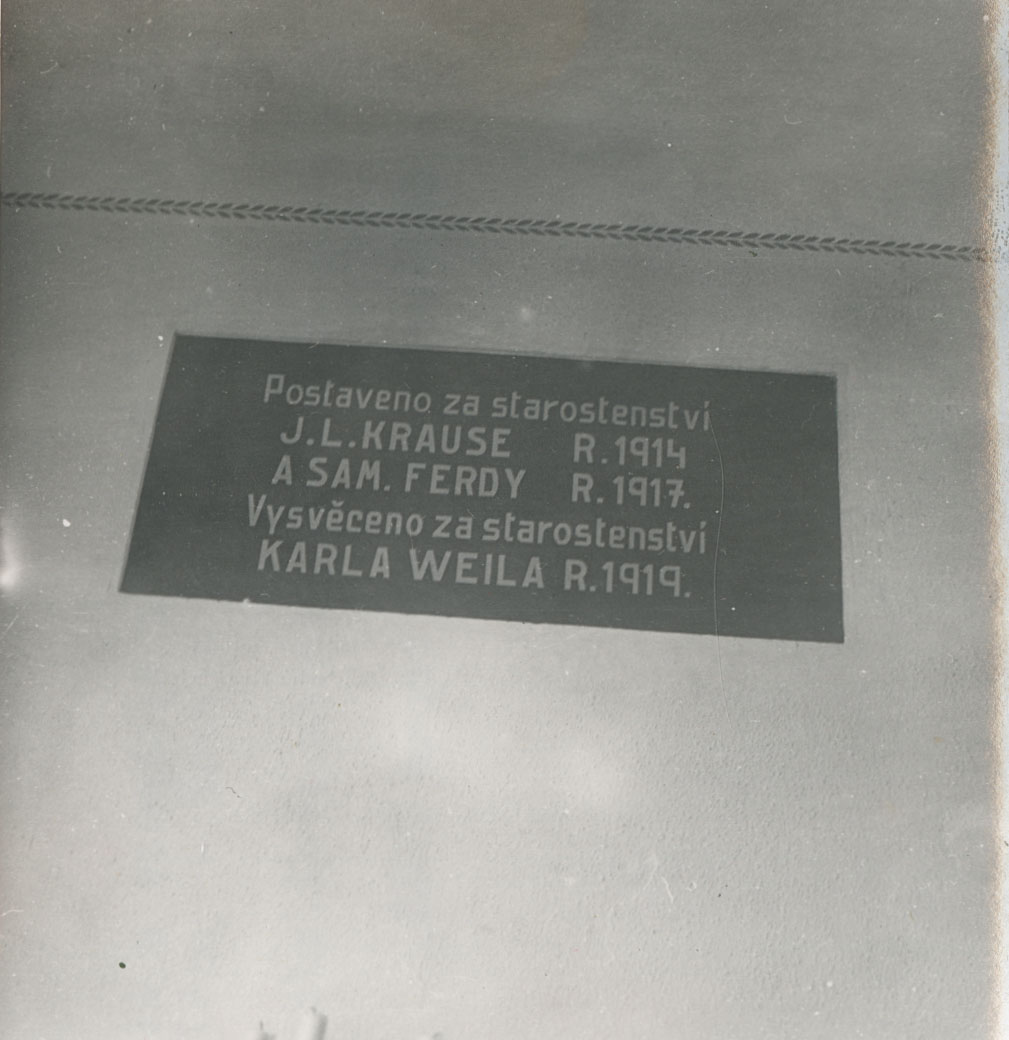
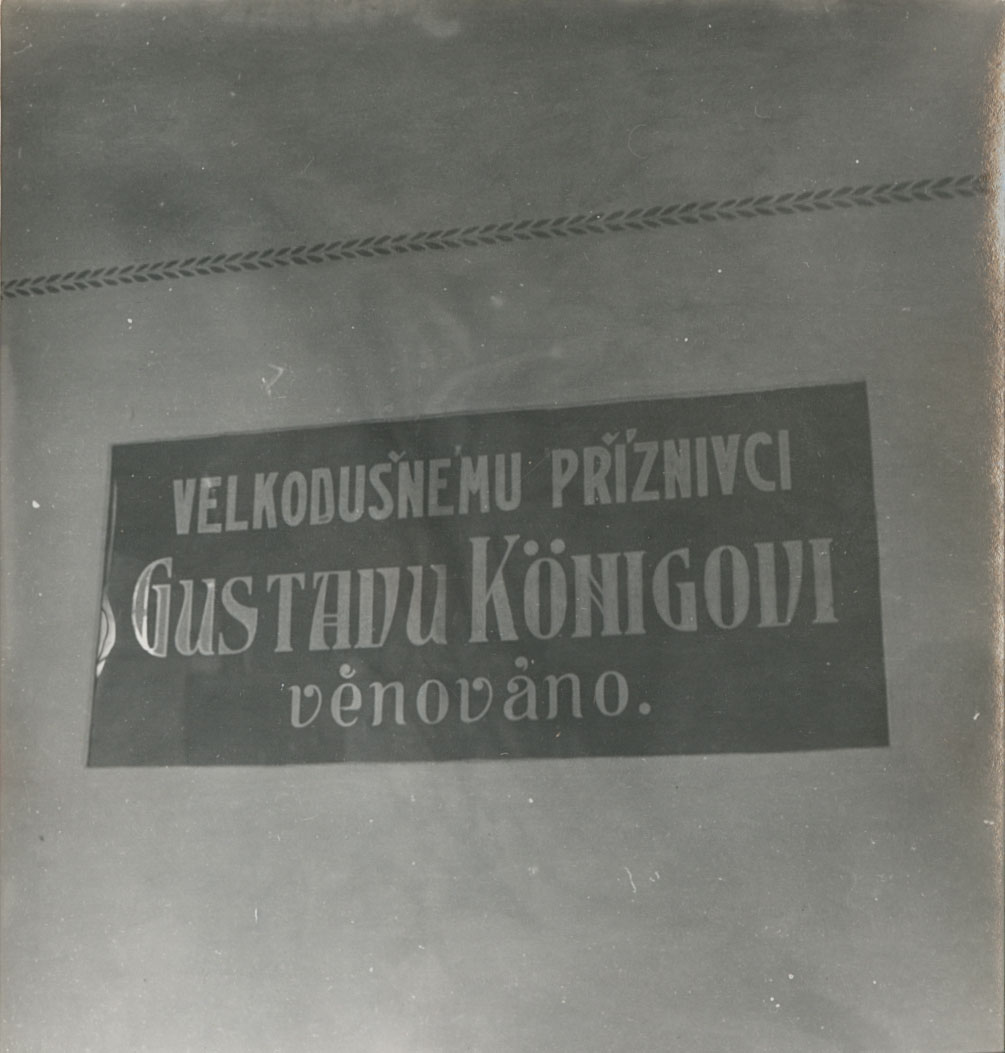
Commemorative plaques walled into the front walls of the side aisles. Jewish Museum Archive, Jewish Religious Community of Milevsko.
GUIDE TO THE NEW SYNAGOGUE
Sokolovská 209
Milevsko
AUTHORS OF THE TEXTS
Lenka Uličná
Studied Hebrew Studies, Czech Studies and Ethnology at the Faculty of Arts, Charles University in Prague. She specialises in Hebrew manuscripts and Jewish material culture. She works as a curator at the Jewish Museum in Prague and lectures at Palacký University in Olomouc.
Vendula Hnídková
Studied art history at the Faculty of Arts, Masaryk University, and obtained her PhD in design theory from UMPRUM. She focuses primarily on a critical re-examination of the canon of modern and contemporary architectural history. She has published several books on the subject and has organised exhibitions at the National Gallery in Prague and Kunsthalle Praha. She works at the Institute of Art History of the Czech Academy of Sciences.
Zdeňka Heroutová
Studied the theory and history of fine arts at the Faculty of Arts, Palacký University in Olomouc, and theology at the Sts Cyril and Methodius Faculty of Theology there. She has long been involved in contemporary cultural activities in the field of fine art. In 2022, together with her husband Marek, she founded the VÝHYBKA Association, which runs a gallery and a shared studio in Milevsko. At VÝHYBKA, she acts as programme director and curator of selected exhibition projects presented there.
Note: For the sake of clarity and comprehensibility, the Czechoslovak Hussite Church is referred to in this text in its current form (the epithet ‘Hussite’ was added to its name as late as 1971).
The project was initiated and implemented by the VÝHYBKA Association with financial support from the Ministry of Culture of the Czech Republic and the Municipality of Milevsko.
©VÝHYBKA Association, 2025
The VÝHYBKA Association was founded in 2022 with the aim of expanding the cultural offer of the town of Milevsko and introducing local audiences to contemporary art forms that are not commonly available in the region. The VÝHYBKA Gallery, together with the shared studio, is conceived as a cultural platform for all age and social groups, fostering intergenerational exchange and involving the local community in the creative process itself. Through its projects, it also engages with the town’s public space, highlighting both its strengths and shortcomings through small-scale interventions. It collaborates with artists and curators from major cultural centres as well as institutions in the wider region.
https://www.facebook.com/galerieVYHYBKAart/
https://www.instagram.com/galerievyhybka/
https://www.galerie.vyhybka.art/
You can support the activities of the VÝHYBKA Association financially here: 2102179880 / 2010